
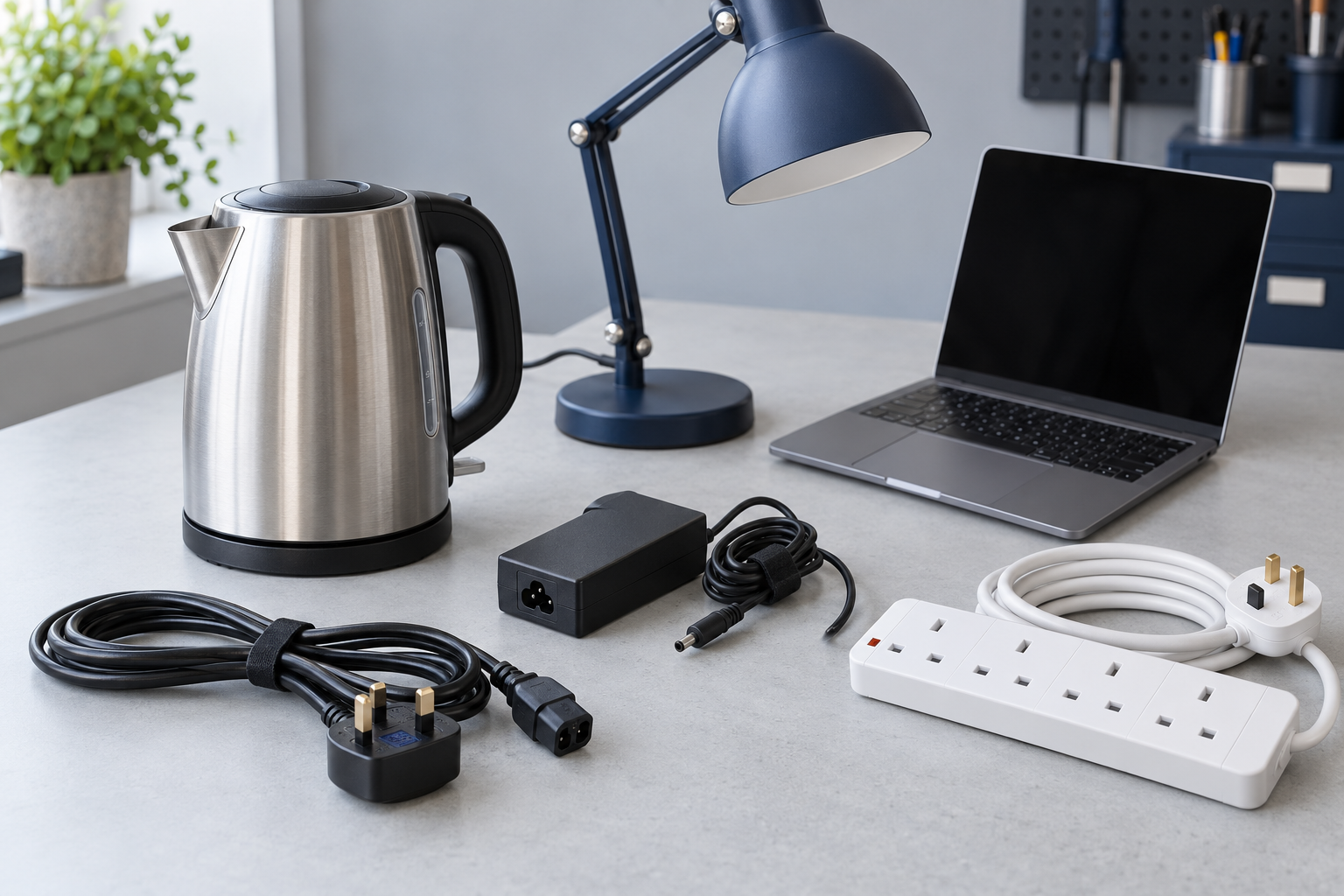
When planning PAT testing, include portable and movable electrical equipment in your review, along with mains leads, extension leads and chargers. The checks needed depend on the item and the risks of using it. Putting an appliance on your inventory does not mean it automatically needs the same electrical tests as every other item.
Equipment to include in your inventory
Walk through each room and record the equipment that people actually use. In an office, this might include computers, monitors, printers, desk lamps and portable heaters. Staff kitchens can contain kettles, toasters, microwaves and fridges. Cleaning cupboards may hold vacuum cleaners and floor-cleaning equipment.
Larger appliances can be movable equipment even if they rarely change position. Do not base your list only on whether an item is light enough to carry. Include storage areas and meeting rooms so that occasional-use equipment is considered too.
Remember chargers and extension leads
A battery-powered device and its mains charger are different parts of the review. A phone or cordless tool running on its battery is not assessed in the same way as the charger connected to the mains. Identify the charging equipment and any detachable mains leads when discussing the scope.
Extension leads can also be missed when they sit behind desks or beneath counters. Make them accessible without moving heavy furniture or exposing anyone to danger. Ask your provider how separate leads and adapters will be recorded and counted.
Does every item need electrical testing
HSE guidance for low-risk workplaces explains that some equipment can be maintained through user checks and formal visual inspections. Other equipment may need combined inspection and testing. A competent assessment should consider its electrical construction, condition and use.
Brand-new equipment should normally arrive safe to use. HSE recommends a simple visual check for damage rather than an automatic formal PAT test. Second-hand, repaired or visibly damaged equipment needs its own assessment; do not treat it as equivalent to new equipment.
Agree what is outside the appointment
Fixed wiring and an EICR are separate from a routine portable appliance testing appointment. Permanently connected or specialist equipment may need a different scope and suitable expertise. Identify those items when booking so that responsibility is clear.
Also clarify how leased equipment, staff-owned items used for work and contractor equipment are managed. A short discussion before the visit helps avoid gaps and duplicated work.
Arrange PAT testing for your equipment
Send National PAT Compliance an approximate equipment list or appliance count, your postcode and details of any specialist items. We will discuss the scope and access arrangements for your premises. Call 0330 301 0244 or request a PAT testing quote online.
Explore our PAT testing service · Areas we cover
Request a PAT testing quote Call 0330 301 0244
Further guidance: HSE portable appliance testing FAQs.